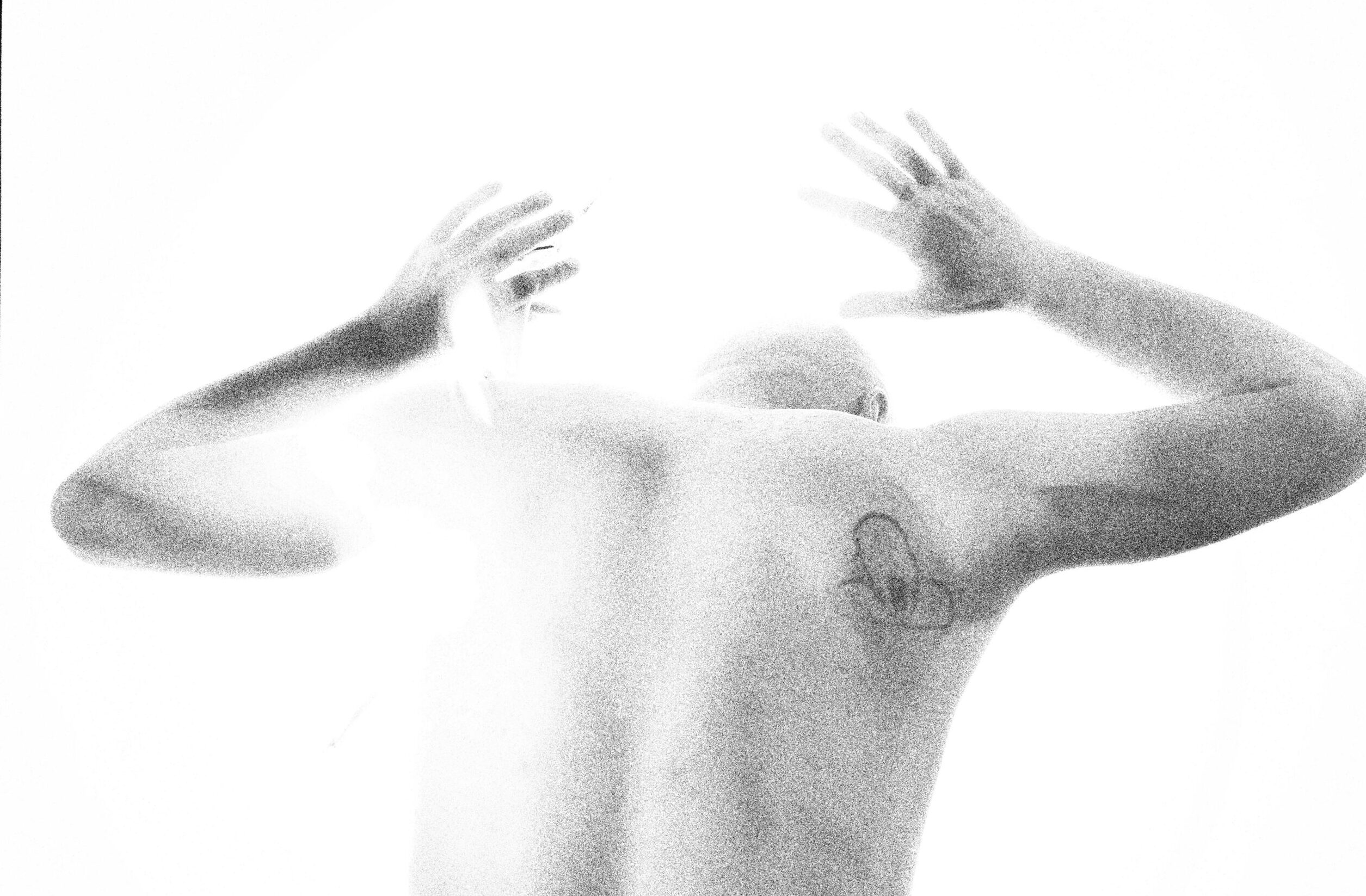
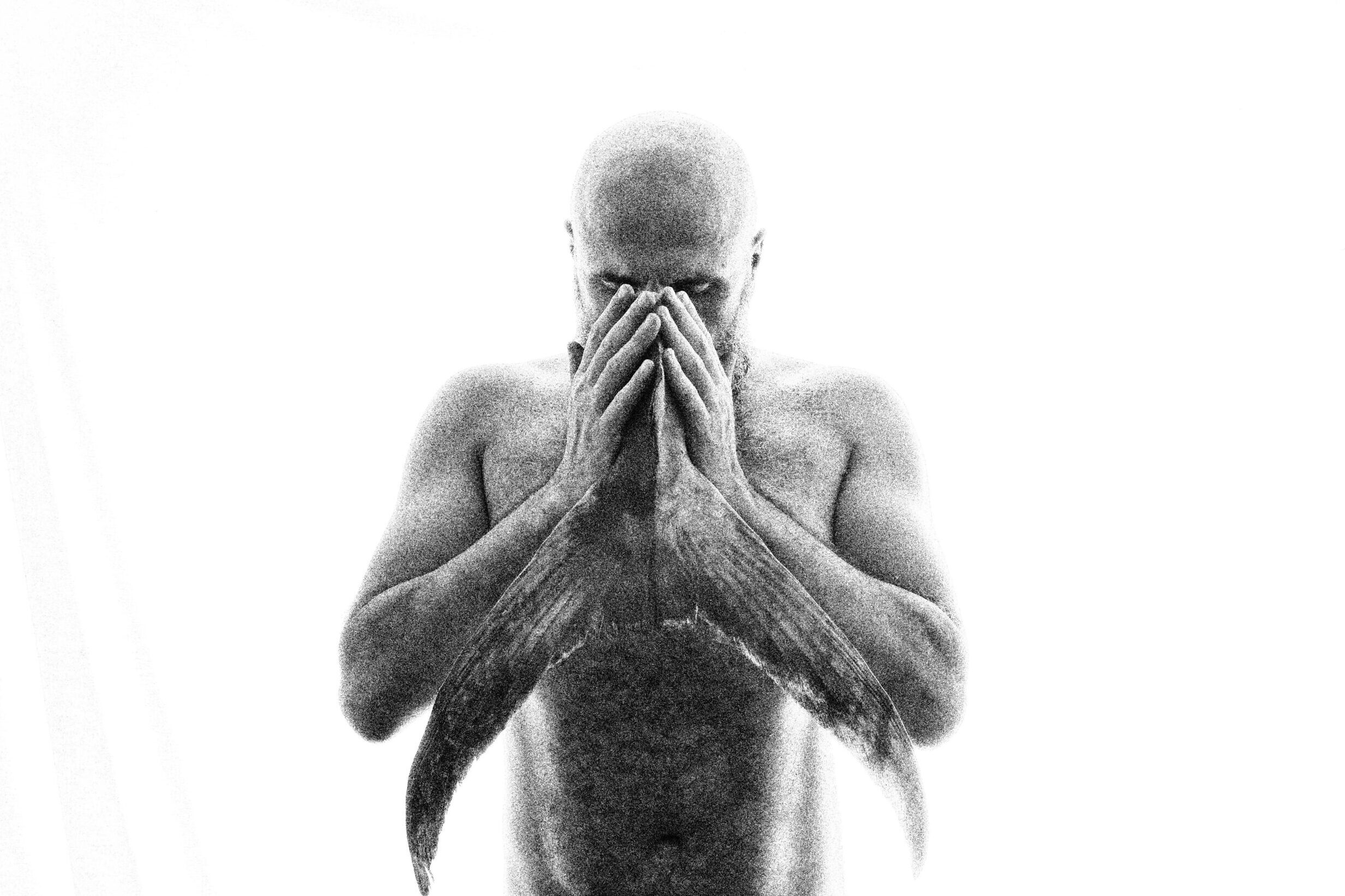
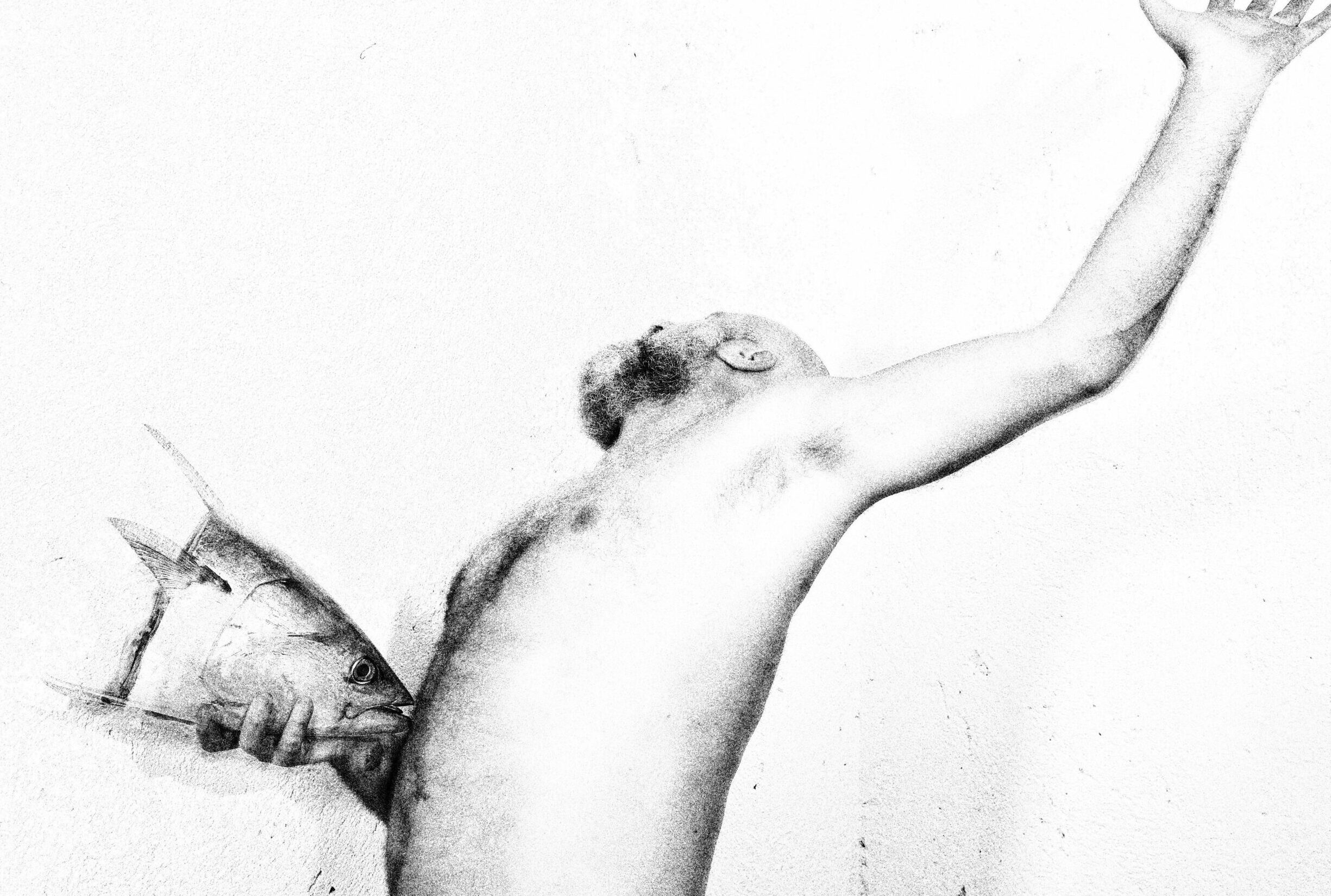
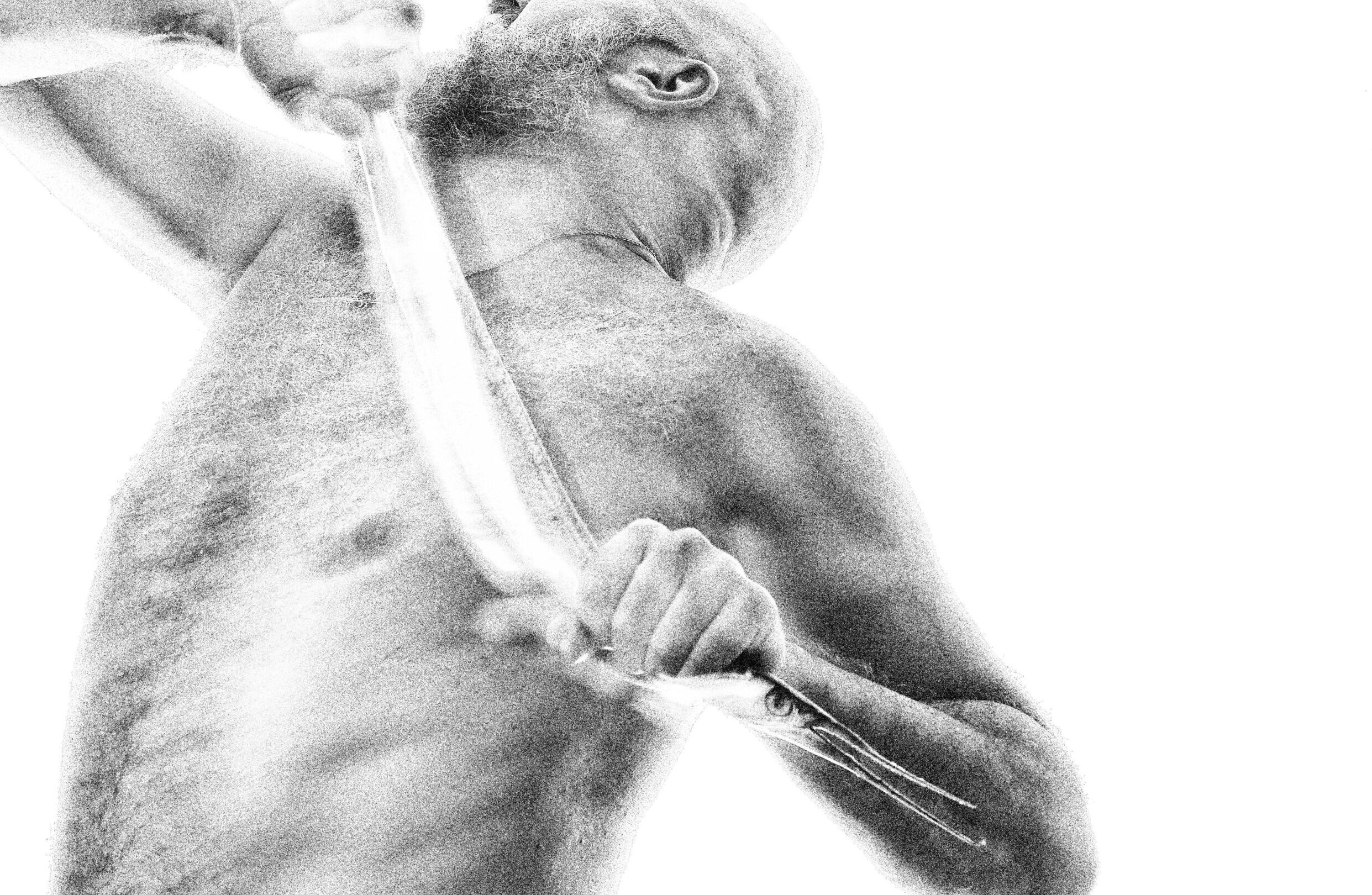
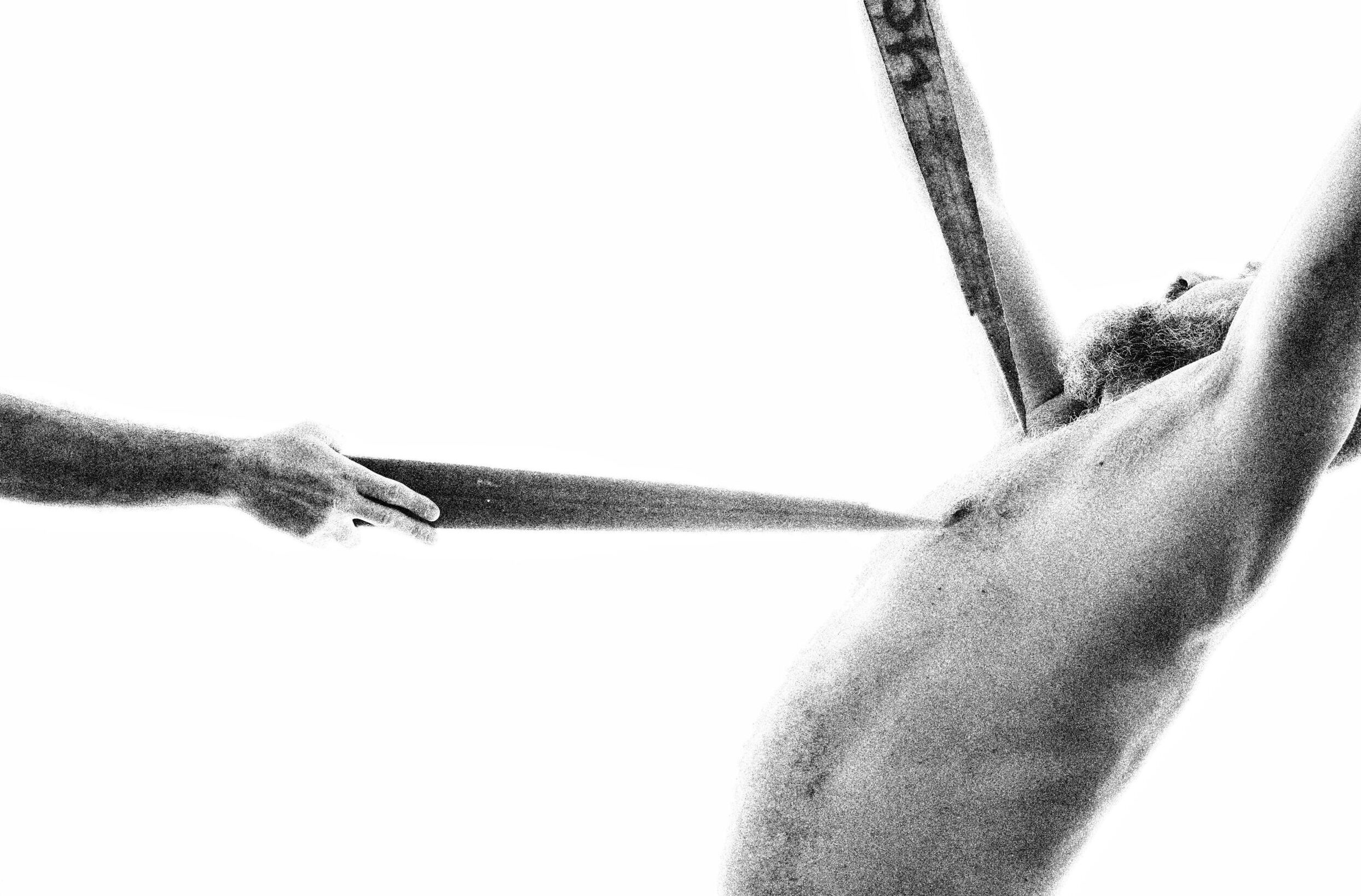
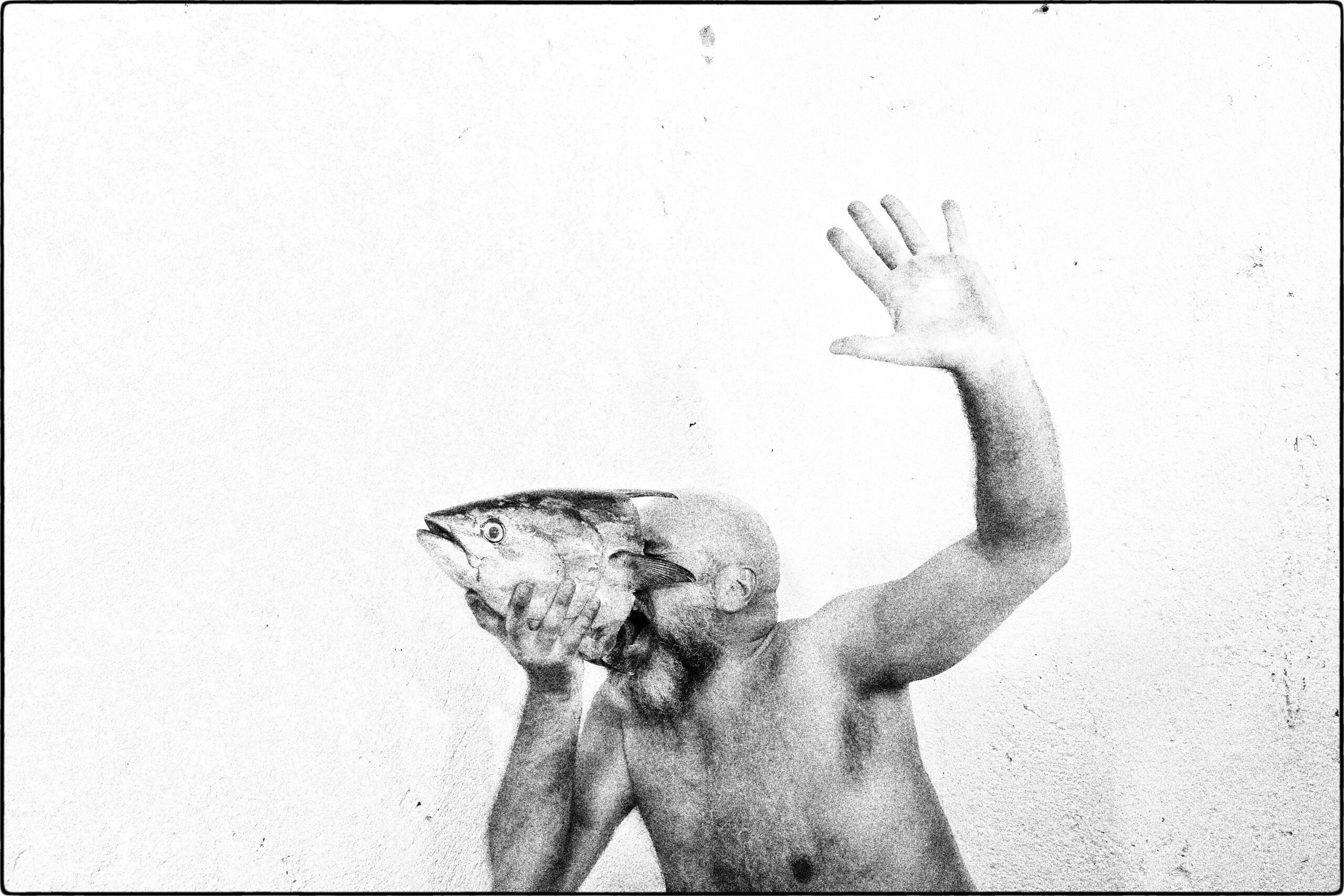
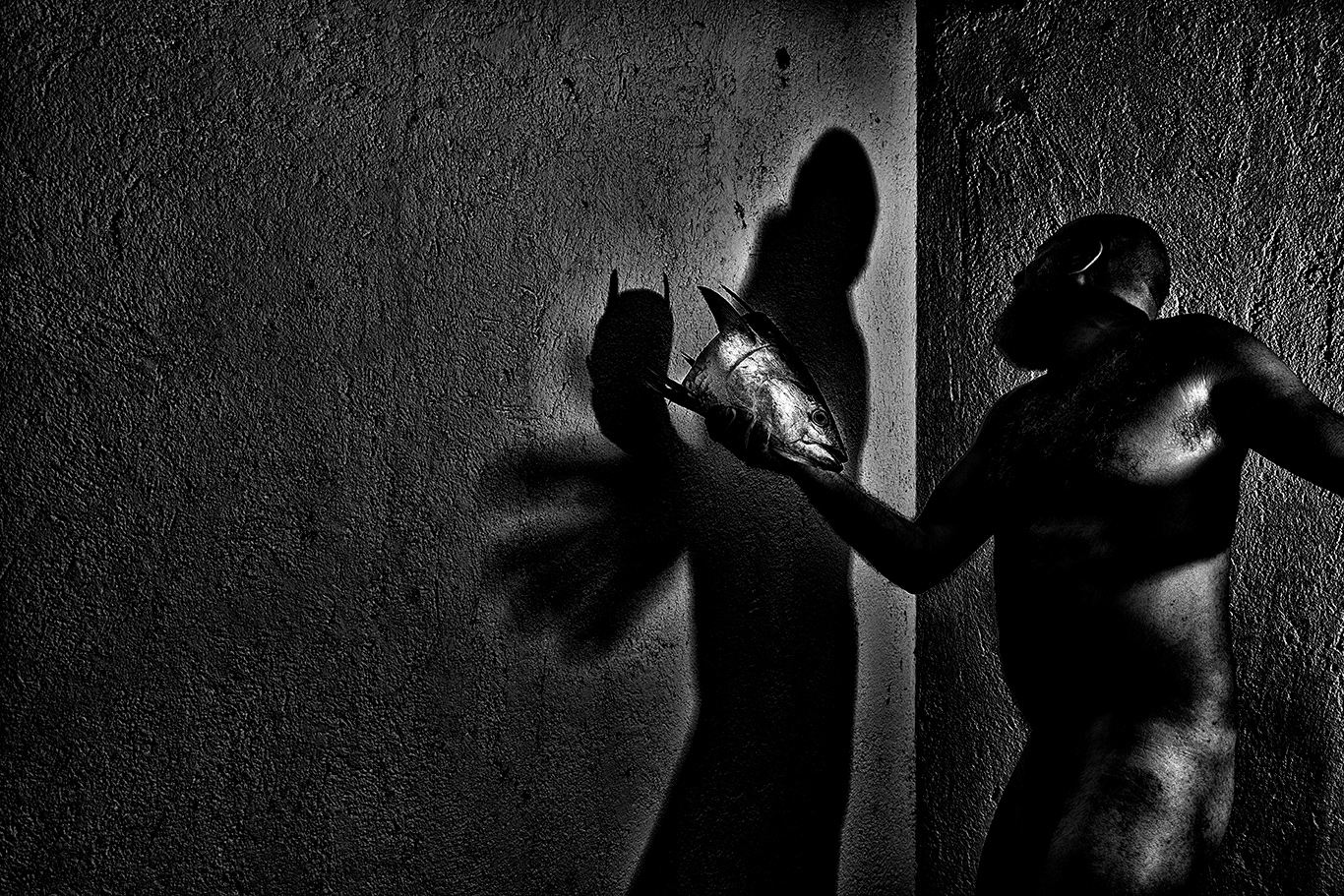
Prometheus steals fire not for himself, but to give it to man. This is the gesture: to expose oneself, to cross the limit, to bring something out of the darkness. Standing in front of the lens is not narcissism: using one’s own body as material, as a territory of inquiry was an obliged choice. Like Prometheus, who offers not words but flesh. The self-portrait, here, does not return a face — it returns a condition, one in which subject and object of the photograph coincide. The object is naked because the subject is naked — not as an aesthetic choice, but for the sole reason of being a self-portrait. It is the nakedness of Prometheus in chains: no protection, no distance between oneself and what takes place. The exposed body is the gesture itself. A whole body is portrayed together with pieces of another body — that of the fish — which acts as an alter ego, that is, as a broken counterpart of the whole body. And therefore self-portrait in this sense. It is as though the broken body were the truth of the whole body and vice versa. Thus the self-portrait as a journey from the self to the self — both whole — passing through the pieces of oneself. The pieces of the alter ego (the fish) are pieces of the universe. Hence the identification of a subject with the pieces of the universe. In essence, the pieces of the alter ego are simultaneously less than the subject — insofar as they are only pieces of it — and more — insofar as they are pieces of something external to it, that is, of the universe. They are, in other words, on this side of and beyond the subject. But the subject is precisely, at once, this side of and this beyond of itself. This is why it is a self-portrait.